Showing posts with label 4Ps Business and Marketing. Show all posts

Friday, August 16, 2013

Prof. David Marsden (Professor, Industrial Relations, London School of Economics) analyses a period of greater labour unrest

The adjustments were made possible by two major changes in employment practices. The first was the use of variable bonuses, which have grown both as a percentage of pay and in terms of the number of employees receiving them. The British annual earnings survey shows that the cut in wages was due to reduced bonuses. The second was the increased use of agency and temporary workers. In the 1970s and the 1980s, such radical adjustments would have required tough negotiations with no certainty of success.

Today, the relevant negotiations take place long before the adjustments are made. For variable pay, bonus systems are often set up as part of the collective pay agreement or they are a regular part of the organisation’s reward system. For temporary workers, the agreement takes place when the employee is hired, and for agency personnel, the pact is between the company and the temporary work agency. Perhaps the most significant change has been in the timing and location of negotiations. It has been relocated from the point at which unions in the past might have gained greatest bargaining leverage. Click here to read more...

Like us and read IIPM Think-Tank articles on facebook

Signals of return to a labour unrest

Every time there is a major industrial dispute in Britain, we look back to previous periods of industrial conflict, and ask whether it is an isolated case or does it signal the return to a period of greater labour unrest. Like Britain, in India too, increased global competition has affected relations between workers and employers. So, has the age of industrial conflict passed, ushering in an era of worker-management cooperation, in the face of threats posed by industrial competitors? It is impossible to forecast changes in the atmosphere of industrial relations (IR), but we can look at some prevailing practices to see if there are any significant changes that support worker-management cooperation.

The onset of the recession in 2009 in Britain was remarkable in two ways. Unlike the previous periods of recession, wages dropped at an annualised rate of just over five per cent in the economy as a whole. They fell by nearly 20 per cent in financial services, but they also dipped in manufacturing and non-financial sectors. As the pays froze, many companies sought to maintain their commitment to their core employees – both blue and white collar. Such adjustments would have seemed inconceivable in the 1970s and the early 1980s. Click here to read more...

Like us and read IIPM Think-Tank articles on facebook

Saturday, July 20, 2013

Refer, Track, Earn

Employee referrals refer to an internal recruitment method employed by organisations to identify potential candidates from the existing employees’ social network. It gives an opportunity to existing employees to recommend their friends, family members, peers for the vacancy existing in organisation.

The employee referral scheme is a preferred method of recruitment today, because it involves less cost and there are monetary as well as non-monetary benefits for an employee.

The Process
At Motilal Oswal Financial Services Limited, all employees can access the referral program webpage on company intranet, through which the data is collected and made available to the recruiters. The benefits of program extend to organisation, employees and the referred candidates.

The Organisation
The data of prospective candidates is sourced from popular job sites and through recruitment consultants. The task is tedious and involves the cost of recruiters. Also, organisation incurs cost in undertaking a contract with consultancy to source candidates.

Both the activities are costly. The manager’s job is to adopt the most cost-effective strategy to obtain the organisational goals. The most feasible and economical method then is through referrals. The only expenditure incurred here is in marketing and communicating the requirement. Click here to read more....

Read More IIPM Related Articles
Zee Business Best B-School Survey 2012
Prof. Arindam Chaudhuri's Session at IMA Indore
IIPM IN FINANCIAL TIMES, UK. FEATURE OF THE WEEK
IIPM strong hold on Placement : 10000 Students Placed in last 5 year
IIPM's Management Consulting Arm-Planman Consulting
Professor Arindam Chaudhuri - A Man For The Society....
IIPM: Indian Institute of Planning and Management
IIPM makes business education truly global
Management Guru Arindam Chaudhuri
Rajita Chaudhuri-The New Age Woman
IIPM B-School Facebook Page
IIPM Global Exposure
IIPM Best B School India
IIPM B-School Detail
IIPM Links
IIPM : The B-School with a Human Face

Monday, March 25, 2013

Companies must adapt or change their business strategies to take into account the new realities of intense global and domestic competition

In this economic crisis, corporate training budgets are being tightened. A research by Josh Bersin, CEO and president of Bersin & Associates, shows that in the second half of 2008, corporate training departments had cut their spending on L&D by 12 to 18 per cent. The number will certainly grow as the crisis continues. There is a need for performance-driven and talent-driven learning so that the senior management could be educated about the short- and long-term impacts.

The L&D budget typically represents a small fraction of a company’s total revenue. Indiscriminate budget cuts can have a major impact on development plans and programmes, and yet it barely makes a dent in the company’s bottom line. For example, if an organisation eliminates or dramatically reduces leadership development training, it will see a reduction in productivity and effectiveness of its leaders.

The signs of outstanding leadership appear primarily among the followers. Are the followers reaching their potential? Are they learning? Serving? Do they achieve the required results? Do they change with grace? Manage conflict? asks Max De Pree.

According to a research by Accrediting Alliance for Training and Development (AATD), nearly 20 per cent of all training occurs from informal information sharing and nearly 70 per cent comes from on-the -job training. So instead of building expensive programmes, it is better to start spending more time creating informal learning networks, coaching programmes and performance support systems. Click here to read more...

Read More IIPM Related Articles
Zee Business Best B-School Survey 2012
Prof. Arindam Chaudhuri's Session at IMA Indore
IIPM IN FINANCIAL TIMES, UK. FEATURE OF THE WEEK
IIPM strong hold on Placement : 10000 Students Placed in last 5 year
IIPM's Management Consulting Arm-Planman Consulting
Professor Arindam Chaudhuri - A Man For The Society....
IIPM: Indian Institute of Planning and Management
IIPM makes business education truly global
Management Guru Arindam Chaudhuri
Rajita Chaudhuri-The New Age Woman
IIPM B-School Facebook Page
IIPM Global Exposure
IIPM Best B School India
IIPM B-School Detail
IIPM Links
IIPM : The B-School with a Human Face

Tuesday, February 05, 2013

To cruise into the league of superpowers, it is not sufficient for India to just have the staggering population.

If India wants to be the economic superpower, a policy of non-interference from the government is required. The corporate world and the civil society will have to come forward to set up the necessary infrastructure. With greater penetration of the telecom sector (including internet) in the hinterland, web-based learning would become possible. The best of the teachers would be able to deliver lectures across the country.

Online learning would be the next big step in educating the country and similar to what ITC has done with e-Choupal, there will be corporates and individuals who can raise money to put up kiosks (with computer and net facilities) even in remote villages and towns and the learning process for the student can be streamlined.

You would need less teachers and just one good administrator is enough to take care of one village/town. That would reduce the dependency on trained teachers at the village level and would allow imparting quality education to millions of youth in this country. The government needs to step aside and let the market forces take over. India is poised to scale greater heights. Whether or not it does, will squarely depend on the free-hand given to the edupreneurs. The potential of this country can only be realised with education opportunities to the 600 million youth. Click here to read more..

Read More IIPM Related Articles
Zee Business Best B-School Survey 2012
Prof. Arindam Chaudhuri's Session at IMA Indore
IIPM IN FINANCIAL TIMES, UK. FEATURE OF THE WEEK
IIPM strong hold on Placement : 10000 Students Placed in last 5 year
IIPM's Management Consulting Arm-Planman Consulting
Professor Arindam Chaudhuri - A Man For The Society....
IIPM: Indian Institute of Planning and Management
IIPM makes business education truly global
Management Guru Arindam Chaudhuri
Rajita Chaudhuri-The New Age Woman
IIPM B-School Facebook Page
IIPM Global Exposure
IIPM Best B School India
IIPM B-School Detail
IIPM Links
IIPM : The B-School with a Human Face

Monday, January 14, 2013

Providing wings to fly

Jayashree Raghuram (Head, India Office – Leeds Metropolitan University, UK)
Q. How do you see the education scenario in India? Why are students increasingly opting for foreign universities?
A. In India, we have a wide spectrum in terms of quality of education and its application in the industry. India has some of the best education providers who proffer the right academic input to students. Simultaneously, there are also run-of-the-mill education institutes that are not able to provide the requisite skill sets fit for the job market. The bulk of good education providers is limited, compared to the demand.
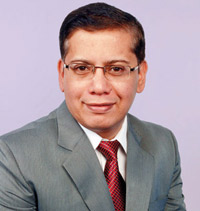
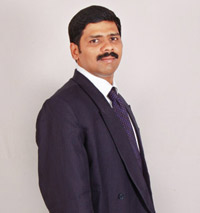
Foreign institutes are becoming increasingly popular because of the wide spectrum of courses they offer, as there is a growing demand for those skill sets. There are courses in public relations, creative enterprise, responsible tourism, environmental health, to name a few, where training and academic input is required in our country, but unfortunately is not available.

Another popular reason for students to opt for offshore universities is to gain international exposure. This is a growing need in India because of the flood of opportunities in multinational companies that are opening shops in India.

Q. You have been instrumental in building the brand of your university in India, Nepal, Sri Lanka and Bangladesh. How do you woo the students?
A. Leeds Metropolitan University is among the popular universities in the United Kingdom, so it was not difficult to extend that to India and rest of the subcontinent. We stand out with our extremely good customer service to international students and are dedicated to provide a good experience to them right from the time of their application. Our alumni are our great assets, and their joining the workforce in India in increasing numbers itself is a story well told about us. Click here to read full interview..

Read More IIPM Related Articles
Zee Business Best B-School Survey 2012
Prof. Arindam Chaudhuri's Session at IMA Indore
IIPM IN FINANCIAL TIMES, UK. FEATURE OF THE WEEK
IIPM strong hold on Placement : 10000 Students Placed in last 5 year
IIPM's Management Consulting Arm-Planman Consulting
Professor Arindam Chaudhuri - A Man For The Society....
IIPM: Indian Institute of Planning and Management
IIPM makes business education truly global
Management Guru Arindam Chaudhuri
Rajita Chaudhuri-The New Age Woman
IIPM B-School Facebook Page
IIPM Global Exposure
IIPM Best B School India
IIPM B-School Detail
IIPM Links
IIPM : The B-School with a Human Face

Friday, January 11, 2013

Discover, Serve & Innovate

Ms. Laura Asiala has held positions in finance, marketing, human resources, and corporate communications since her association with Dow Corning in 1984. She serves as the founding chairperson and president for the Bay County chapter of Habitat for Humanity, and a parent volunteer/leader in a number of educational associations. A global leader in silicones, silicon-based technology and innovation, Dow Corning offers over 7,000 products and services through the Dow Corning and XIAMETER brands. Ms. Asiala speaks about various projects the company has undertaken to stay in the corporate competition.

Q. Please tell us about Dow Corning’s Citizen Service Corps?
A. The Dow Corning Citizen Service Corps (CSC) offers Dow Corning employees at all levels of the company and from around the world a unique, hands-on opportunity to expand their understanding of emerging markets and fuel innovation at Dow Corning through service to others. Through the Dow Corning Citizen Service Corps projects, the company will discover, serve and innovate.

Discover:
This programme is a unique opportunity for Dow Corning employees to experience the world from a different perspective and discover life in an emerging economy.

Serve:
Rather than providing support to a single individual or family, these projects are designed for high impact – to make a tangible, valuable and sustainable contribution to entire community.

Innovate:
The programme serves as a living laboratory for Dow Corning to explore potential business prospects at the base of the pyramid – opportunities that also have the potential to improve the quality of life for people who do not currently benefit from our technology.

Teams of 8-10 employee volunteers are selected to be sent to communities in developing economies where the company currently does not have a business presence. These volunteers participate in intensive, four-week service projects that are aligned with Dow Corning’s business objectives and sustainability focus. Click here to read full interview...

Read More IIPM Related Articles
Zee Business Best B-School Survey 2012
Prof. Arindam Chaudhuri's Session at IMA Indore
IIPM IN FINANCIAL TIMES, UK. FEATURE OF THE WEEK
IIPM strong hold on Placement : 10000 Students Placed in last 5 year
IIPM's Management Consulting Arm-Planman Consulting
Professor Arindam Chaudhuri - A Man For The Society....
IIPM: Indian Institute of Planning and Management
IIPM makes business education truly global
Management Guru Arindam Chaudhuri
Rajita Chaudhuri-The New Age Woman
IIPM B-School Facebook Page
IIPM Global Exposure
IIPM Best B School India
IIPM B-School Detail
IIPM Links
IIPM : The B-School with a Human Face

Thursday, December 06, 2012

Ushering in change with people in mind

Turnaround situations can fail if HR management is not taken as a strategic issue to look into. It is more important than the financial merits of the change process. This is because any change process creates uncertainty amongst people with regard to their future. The need to protect one’s interest takes precedence over anything else. Hence, if the people are convinced and they believe that change is not going to affect them adversely, they support it to make it a reality, else there shall be resistance of all forms and shape. This is an important aspect for HR professionals to understand, and all initiatives should be directed to bring about the clarity they seek. It is not possible to have a change without affecting some people’s interest which may be job, role, career, etc. Here, the important thing is to outline why this is happening, what are their future growth options and how the organisation can support them. The worst thing is to keep people in the dark and expect them to hear about things from the grapevine. For once, over communication is better in any change process.

The other two aspects that need attention are the human aspect; we are dealing with people and not numbers and names in a spreadsheet. Each person should be given adequate attention and opportunities to be heard in a non-threatening environment. Some of these sessions can become emotionally stressful and require professional counselling. Read more..

Read More IIPM Related Articles
Zee Business Best B-School Survey 2012
Prof. Arindam Chaudhuri's Session at IMA Indore
IIPM IN FINANCIAL TIMES, UK. FEATURE OF THE WEEK
IIPM strong hold on Placement : 10000 Students Placed in last 5 year
IIPM's Management Consulting Arm-Planman Consulting
Professor Arindam Chaudhuri - A Man For The Society....
IIPM: Indian Institute of Planning and Management
IIPM makes business education truly global
Management Guru Arindam Chaudhuri
Rajita Chaudhuri-The New Age Woman
IIPM B-School Facebook Page
IIPM Global Exposure
IIPM Best B School India
IIPM B-School Detail
IIPM Links
IIPM : The B-School with a Human Face

Monday, November 26, 2012

Innovation and Change

Innovation brings in change, value, success, enabling organisations to align with changing business paradox. Innovation becomes imperative to cope with the situational demand, for keeping the business agile, to improve productivity and cost, to get return on investment and add value to the customers. Organisations skilled in innovation are early winners as they can conceive the need for a change in early stages and make things happen distinctively. In a dynamic and effervescent environment of change and innovation, HR’s role in facilitating the transition becomes important.

During the gestation of current state and innovation, chances of getting in redundancy are high. Organisations need to identify the skill gaps, understand training needs and quickly implement programmes to enable the employee to come onboard, ramp-up and get motivated to move on. Taking employees along, empathising with them, simplifying and clarifying their thoughts and facilitating them to sense and value the new is the key to carry a change successfully.

Managing change by a process-oriented approach

Things that organisations need to practice to involve staff in the process of change and innovation include:
Using the 3Cs (Communication, Communication & Communication) effectively, i.e. communicating the change process through multiple channels.
Provide the employees with information, tools, and other resources for an easy transition.
Organisations need to look at the volunteers and sponsors within the work groups to gain the buy-in and smooth execution.
Identify star advocates in each work group.
Use rewards and recognition to facilitate the change process among employees.
Continuously plan ahead on how to handle resistance to change by identifying natural restraining elements and ways to overcome them.
Monitor and effectively manage change lethargy by constantly keeping employees motivated. Read more...

Thursday, November 22, 2012

Dave Shemmans (CEO, Ricardo Plc.) & his Group HR Director, Timothy Hargreaves come together to emphasise on core CEO-HR issues in a well-run business

....The core issue for HR is to provide the right skills at the right time and place required by the business, while protecting the company’s long-term knowledge base. As a publicly quoted company, it is essential that all our core business functions – of which HR is crucial in a people-led business – are acutely aware of the financial performance implications of their respective activities.

Q. How can you ensure the CEO’s voice reaches all?
Dave: The maintenance of effective channels of employee communication is extremely important to Ricardo. We invest significant resources in the production of monthly internal newsletters both for the group and for each of the main geographical operating divisions. These are used as the basis of team briefings in which staff can raise and discuss questions, and also learn about the ongoing projects.

We also provide an adapted version of the briefing given to our investors at our financial mid-year and year-end. These are presented in town hall meeting style, in which questioning and discussion are encouraged. Collectively, these channels of communication build upon the more direct employee supervision and management frameworks such as appraisal mechanisms to ensure each employee appreciates the relevance of his contribution to the firm’s success. Read more...


Read More IIPM Related Articles
Zee Business Best B-School Survey 2012
Prof. Arindam Chaudhuri's Session at IMA Indore
IIPM IN FINANCIAL TIMES, UK. FEATURE OF THE WEEK
IIPM strong hold on Placement : 10000 Students Placed in last 5 year
IIPM's Management Consulting Arm-Planman Consulting
Professor Arindam Chaudhuri - A Man For The Society....
IIPM: Indian Institute of Planning and Management
IIPM makes business education truly global
Management Guru Arindam Chaudhuri
Rajita Chaudhuri-The New Age Woman
IIPM B-School Facebook Page
IIPM Global Exposure
IIPM Best B School India
IIPM B-School Detail
IIPM Links
IIPM : The B-School with a Human Face

Thursday, October 25, 2012

MANISH CHOUDHARY VP & MD, PITNEY BOWES SOFTWARE INDIA

Taking head-on the challenge of setting up Pitney Bowes base in India, Mr. Manish Choudhary, in 2007, moved to his native place as an expat, armed with over 10 years of cross-global experience at the PBBI headquarters at Troy, New York. Mr. Choudhary’s efforts to try to walk before he could run made him a leader who understands business at the grass-roots level. The India centre has grown to become a top employer within 5 years.

Q. Architecture and business management; you make an amazing combination. What led to it?
A. After a degree in architecture, I went to the U.S. for my postgraduation from the University of Akron, Ohio. Later, I did executive MBA from Anderson School of Management followed by a management course at the National University of Singapore (NUS).

However, I think I am more like an architect who is into sketching and painting. I believe if you make your passion your profession, it becomes difficult to maintain the passion you have. I like photography, but if I make it my career I will eventually lose interest in it.

Q. What career idea would interest you the most when you were growing up?
A. As a child I thought I would be an engineer. I always believe that things change rapidly; and I have the ability to adapt and change quickly with time. As a child, I would try different things and wait till something strikes. If things would not happen, they were never meant to happen.

Q. Share your experience of setting up Pitney Bowes in India?
A. The experience has been rewarding and I have grown on both professional and personal fronts. The experience has made me wiser and faster. I remember when I hired the first person in India, I spoke for three hours and the interviewee spoke for three minutes. The only thing he asked was ‘do you have an office’. To my no, he said he would come back once we have an office. We chose a creative way to hire, even picked up visiting cards from a restaurant bowl! click here to read full inverview...

Read More IIPM Related Articles
Zee Business Best B-School Survey 2012
Prof. Arindam Chaudhuri's Session at IMA Indore
IIPM IN FINANCIAL TIMES, UK. FEATURE OF THE WEEK
IIPM strong hold on Placement : 10000 Students Placed in last 5 year
IIPM's Management Consulting Arm-Planman Consulting
Professor Arindam Chaudhuri - A Man For The Society....
IIPM: Indian Institute of Planning and Management
IIPM makes business education truly global
Management Guru Arindam Chaudhuri
Rajita Chaudhuri-The New Age Woman
IIPM B-School Facebook Page
IIPM Global Exposure
IIPM Best B School India
IIPM B-School Detail
IIPM Links
IIPM : The B-School with a Human Face

Thursday, October 11, 2012

She Writes Story Contest winner: Chitralekha

Chitralekha is one of twelve winners of the MSN-Random House She Writes a Story Contest', as chosen by our judges. Her story 'Conundrum' features in the 'She Writes: A collection of Short Stories' published by Random House India and available at all leading bookstores.


Chitralekha was born and raised in South Mumbai. She has lived in Jamshedpur, Hong Kong, Singapore, Los Angeles, 
Chicago, and New York and wandered the rest of the globe observing cultures. She is presently parked in New Delhi, trying to crystallize the lessons of a nomadic life.


read an extract from chitralekha's story 'conundrum'
Shanta Kamble and Pramila Dhoifude had been friends for years. They were both widows, nearly the same age, and neighbours in Harish Chandra Chawl, near Dadar, in Mumbai.


The chawl had been built in the 1950s in an area adjoining the National Textile Mill. Most of the tenants had worked in the mill before it shut down in the early '80s, following an unsuccessful strike by a prominent trade union leader. Some residents had purchased their rooms against 'pagdi' from the original allottees, and had nothing to do with the mill. The two women belonged to the second category, which gave them something in common.

Shanta Kamble was fifty-five-years-old. Her late husband had worked in the Port Trust and left her with a small pension after his demise. She lived with her unmarried son, daughter, and nephew. The nephew, Vishwas, had lived with them since he was twelve. Shanta's son worked as an assistant in a computer firm which provided technical support for home computer owners.

She had just arranged his marriage to a girl who worked as a telephone operator in an export company.

Shantabai's daughter Madhuri taught in a coaching class. She was dark skinned, with acne scars all over her face; a fact reflected in her mother's oft-stated inability in arranging her marriage.

The nephew was economically the weakest, and worked as a peon in the nearby municipal school. He had not studied beyond the 8th standard. He was a handsome fellow, with a jaunty air; the only son of Shanta's sister who was married to an unemployed drunkard. The aunt was frequently praised for her selflessness in taking him in since the sister could not fend for her son. It was acknowledged within the family that all efforts must be made to prevent the nephew from taking after his father. On occasion, when the family visited Vishwas' mother in their village, they left a spare key with Pramila Dhoifude. She would clean the house for them while they were away and bring a plastic pouch of milk on the day of their arrival.

in her own words: chitralekha

Have you always been a writer? What made you start writing?
This is my first attempt at fiction.

What inspired you to enter She Writes?
The categories were so intriguing. I was spurred to put in my two bits' worth.

Why did you choose the category you did?
I have been a Woman in the City all my life. There are many experiences women can have in a city, some common to all cities, some unique to a particular city, all worth telling. I'm glad MSN/Random House added the condition of including a quote, it added a bit of discipline to the project. Otherwise I would have gone into orbit!

Do you have a writing routine - e.g. do you have favourite places to write/favourite times of day/do you write longhand or on a computer?
This is the first time I have written fiction for publication. I wrote it on my laptop in my favourite chair...I hope this process works in future!

Who is your favourite author?
I have a long list of them. The world is full of exceptional writers, living and dead. It is a pleasure to think a new "favourite" could be around the next page.

Which book has inspired you the most?
"Ramakrishna - A Phenomenon" by Christopher Isherwood. Bengalis are steeped in the traditions of Ramakrishna and Vivekananda. It was fascinating to explore a western viewpoint, especially by someone like Isherwood, who is not associated with religiosity. It was like a mirror held up to the self you think you know but don't. Which key piece of advice would you give to any other budding writer? Writing is like giving birth, it is in the hands of a higher power. Let the process take you over.

Friday, May 18, 2012

Trick an angel of death into sparing your soul... by shopping online!

You hear it [almost] everywhere these days – discount sites offering great deals. Many think the idea hasn’t come of age. One yamdoot disagrees. So does Snapdeal.

Not many Indians know him as ‘Grim Reaper’. For people of this country, he goes by the name of Yamdoot, the famous messenger of death. Actually, if you want to add a touch of funk to his identity, call him ‘Yamdude’, as he is christened in the latest Snapdeal campaign.

Group-buying and discount websites are a rather modern day occurrence in India. But every passing day, more and more are buying into the idea. Most are either teenagers or those with a youthful spirit. Understanding this, Snapdeal has come up with a concept that appeals to youngsters, is light-hearted and snappy to say the least. The campaign has Yamdude sporting shades, branded shoes, watches, jewelllery et al. He is even shown enjoying a good facial treat at a beauty salon! This series of four TVCs has non-serious 20-25 second-long scripts, and that is perhaps where the ads score the most points.

The series of ads (where Yamdude is shown enjoying discount offers from Snapdeal.com), was conceptualised by DraftFCB Ulka. Some are of the opinion that the content lacks originality, because it is a direct lift from a foreign ad. [Remember the Green King IPA beer TVC, where the young lad survives some ‘fatal’ accidents because the angel of death is busy sipping beer at a bar?] Agreed. But given that the idea is now being put forward to Indian consumers, one’s got to trust that these TVCs can influence brand recall – and in favour of Snapdeal.

Explaining the thought process behind the campaign, Shiveshwar Raj Singh, COO, DraftFCB Ulka tells 4Ps B&M, “At Snapdeal, the kind of deals you get are so wonderful that even immortals would be hard pressed to turn them down. With this simple premise, we came up with the idea of the God himself getting enamored by the range of earthly experiences that you can get access to with Snapdeal. Once you have an iconic image like ‘Yamdude’ in your campaign, then all product offerings get wrapped around it”. Without using a celebrity, the wisemen behind the campaign have managed what others using the most publicly-recognised faces often can’t – paint the real meaning of the brand’s punchline. Through this campaign, Yamdude does prove why ‘You only live once’.

The campaign has been launched across all media vehicles, including TV, radio, Out of home and online. While nearly 35% of the ad spend has been reserved for airing TVCs, the rest is equally distributed amongst the remaining media forms.

The first TVC was launched on December 15, 2011. It showed a skydiver struggling with his parachute. Along came Yamdude, who spares the skydiver’s life in exchange for his Snapdeal vouchers! Other TVCs showed a marathon runner whose life is spared, an old man who gets to live another year (because Yamdude gets busy with his Snapdeal consignments), and a Snapdeal delivery guy who comes face to face with Yamdude (Yamdude takes the delivery at room #773H – invert the room number vertically and it reads HELL!). The work of the lead cast Vijay Maurya – who plays the role of the powerful yet likable Yamdude – in putting across the message is worth a word of appreciation.

For more articles, Click on IIPM Article

Source : IIPM Editorial, 2012

Thursday, April 19, 2012

“Our sales have jumped due to our marketing efforts”

With competition thickening in realty, efficient delivery of projects and getting the brand’s core proposition right will be the key to success.

In the online space, Godrej Properties is probably a pioneer in activating the YouTube channel and the Flickr gallery. The company showcases videos and pictures of its properties so that customers can get a feel of the product. Girish Shah, Vice President - Sales and Marketing, Godrej Properties Ltd (GPL), talks to 4Ps B&M’s Mona Mehta about how the company is successfully managing to retain its GPL brand trust and how through innovative marketing campaigns and strong focus on customer engagement initiatives, GPL has been branding and marketing itself. Edited excerpts:

What aspects have gone into shaping and evolving your branding strategy?
Branding and marketing has become a key driver in real estate today. In fact marketing investments in real estate has seen unprecedented growth across media over the past few years. We have been aware of this trend and our brand strategy has been conceptualized out of our deep focus and understanding of our consumers across regions. Our key drivers in creating a strong brand have been to develop a new visual language which resonates with the new India, a strong focus on consumer engagement initiatives, intensive and innovative marketing campaigns for greater visibility and recall, establishment of an award winning CRM programme to service our customers in the long run and activation of the global sales footprint. Our motto is to create long-term relationships with our customers

What message have you been able to communicate across your consumers through your branding efforts?
We have implemented a our new brand language for GPL across media and mediums, which makes the brand look and feel distinct, approachable, with a strong association of trust and transparency of the mother brand and yet be modern and contemporary. We believe real estate is a very micro-market driven business. Hence our approach always has been of implementing different strokes for different folks. We use the relevant medium to cater to the right audience. For e.g. we participated in a Gujarati play to cater to Gujarati audience for our property in Ahmedabad. Similarly, we have engaged with the HNI audience through golf, polo, theatre and music to present our high end properties. Over time we have realized that our sales have taken a quantum jump due to the increased awareness and visibility of our marketing efforts.

How do you make your branding stand out in the crowd?
We see to it that every campaign has one innovation which will give the activity enough buzz and awareness. The oxygen bar along with the sapling drive campaign at Godrej Prakriti, Kolkata, won us the award for the ‘Best Marketing Campaign of the Year’ at the CMO Asia Awards. Similarly our campaign – featuring the TOI online road block innovation – has led to Godrej Garden City being adjudged the ‘Most Admired Brand’ in the real estate sector, according to the Asian Leadership awards. We were probably the first ones to activate the YouTube channel and the Flickr gallery to showcase videos and pictures so that our customers get a feel of the property even before he visits us.

What are the inherent brand attributes for a successful real estate company?
Real estate is a very emotional purchase although it has a very rational undertone to it. With the influx of known business houses into real estate, getting the core proposition of the brand right along with its delivery on ground will make or break a real estate company in the future.

For more articles, Click on IIPM Article

Source : IIPM Editorial, 2012

Tuesday, March 13, 2012

“Branding helps sell the USP of your projects”

As the real estate industry becomes more mature, it is fast adopting corporatisation and branding practices to meet consumer expectations.

Oberoi Realty’s Reema Kundnani, Vice President, Marketing & Communication, speaks to 4Ps B&M’s Mona Mehta on how branding can help build trust and confidence among real estate buyers and sellers. Edited excerpts:


How is branding helping to change the image of the real estate industry?
The real estate industry is maturing and we are seeing a lot of corporatisation happening. The industry has now become serious about branding, positioning, promotions and building a reputation for itself like any other sector. In our case, Oberoi Realty has been positioned as a premium, high quality luxury brand in terms of project design and execution. That’s our USP and branding helps us maintain our track record in the industry.

What’s your approach to branding and what message it seeks to convey?
We believe in responsible branding and our adspend is geared towards consciously promoting our brand through responsible branding. Through our ads we tell customers what we stand for. The tagline of our ads say, “Our apartments are ready, are you?”Following the launch of Oberoi Splendour at JVLR at Andheri in Mumbai, we have moved 400 families into 3 BHK apartments that cost Rs.2.2 crore each.

Has branding helped in pushing sales and creating the right awareness?

Branding helps build the right perception in the minds of customers. The branding of Oberoi Realty, through which we target the upper premium income audience, is creating a similar perception in our TG. Right branding helps to create perceptions about ownership of a product with all its attendant benefits. By communicating about our brand, we have been able to create a vision of our product that’s high on technology and design experience.

What particular branding strategies have you gone for and how are they different from the others?
Oberoi Realty has adopted two to three innovative branding strategies. Firstly, Oberoi Realty has tried to create a brand pull. We have been able to communicate that ours is a brand with premium and luxury positioning quality and design. Secondly, we have focused on enriching the customer experience by letting customers feel and experience the product before they buy. Oberoi Realty has always tried to be different in its communication. We put up our ads without putting the location of the building, with the tagline, “location available on request.”

Does branding help real estate players to connect closely with consumers?
Branding is important for the real estate industry because there are thoughts, emotions and decisions involved in the purchase of your dream home. When it comes to expenses, buying a house is one of the costliest expenses for a buyer and there is a lot of emotional attachment involved. Oberoi Realty focuses on building high trust and transparency in all our projects. We do not discount prices because the involvement of buyers with the brand is that much higher.

For more articles, Click on IIPM Article

Source : IIPM Editorial, 2012

Thursday, February 16, 2012

Advertising - Hotspots and Rankings - International Curry

Some international campaigns succeed in creating momentously historic landmarks in the global advertising playfield. 4Ps B&M brings to you a review of one such stellar campaign that was active during the fortnight ending November 30, 2011

Served fresh!

Advertiser: Lay’s
Ad Title: Lay’s: Machine
Category: Ambient

4Ps TAKE: There are thousands of products out there across categories vying for your attention through multiple mediums. The flow of information is so overwhelming that after a certain point of time, your brain stops registering information. In fact, the human brain in the present time has developed a unique defense mechanism under the contours of which it only accepts what appeals to it the most. But some brands stand out with their approach and these are the ones which successfully manage to position themselves as category leaders resulting in increased market share. Lay’s happens to be one such brand. Years of careful and well crafted advertising has made it one of the most consumed potato chips in the world. The consistent challenge is to reinforce and consolidate its position. To achieve the same, Lay’s in association with +Castro (advertising agency) created a unique ambient campaign recently. The idea was to showcase transparency in terms of natural ingredients used. So while a lot of brands keep their ingredients secret (after all, what will you make out of monosodium glutamate, disodium guanylate and disodium inosinate?), Lay’s decided to communicate how 100% natural potatoes coupled with vegetable oil and a pinch of salt make their potato chips the best.

Conventionally, a classic sampling exercise would have sufficed. But Lay’s put up special vending machines in malls across US, which, instead of accepting coins, required just a natural potato to deliver the end product. Customers had pick a potato up, drop it into the machine to see the action starting. The shutter on the front panel of the machine would open to reveal the potato being processed (from peeling to chopping and then finally frying) and potato chips get finally delivered in a freshly sealed packet. The effect – people waited in queues for their turn just to see how 100% natural potato chips were being prepared. Just keep a close watch. Looking at the response, a vending machine might soon be coming up at a mall near you.

For more articles, Click on IIPM Article

Source : IIPM Editorial, 2011.

An Initiative of IIPM, Malay Chaudhuri and Arindam chaudhuri (Renowned Management Guru and Economist).

For More IIPM Info, Visit below mentioned IIPM articles.

IIPM Best B School India
Management Guru Arindam Chaudhuri
Rajita Chaudhuri-The New Age Woman
IIPM's Management Consulting Arm-Planman Consulting

IIPM in sync with the best of the business world.......

IIPM Prof. Arindam Chaudhuri on Internet Hooliganism
Arindam Chaudhuri: We need Hazare's leadership
Professor Arindam Chaudhuri - A Man For The Society....
IIPM: Indian Institute of Planning and Management
IIPM RANKED NO.1 in MAIL TODAY B-SCHOOL RANKINGS
Planman Technologies
IIPM Contact Info

IIPM History
IIPM Think Tank
IIPM Infrastructure
IIPM Info

IIPM: Selection Process
IIPM: Research and Publications
IIPM MBA Institute India

Wednesday, January 25, 2012

GREEN PRODUCTS GO ON HOLD IN HARD ECONOMIC TIMES

The patrons of green products are facing the burnt of economic conditions. While some are still thinking, most have gone back to cheaper non-greens

In August, Lloyd Alter came up against the limits of his environmental convictions when he had to replace the leaky roof on his house in Toronto.

“For years, I said I would install a reflective metal roof,” because it helps to reduce heat and lower energy costs during the summer, said Alter, an architect who writes about design for Treehugger, a sustainability-focused website. But “when push came to shove,” he said, “I bought asphalt (one which costs almost half of the metal roof and made from a a petroleum-based material).”

It is the kind of reality check that many eco-conscious consumers face these days. And like Alter, most have resorted to cutting their spending on a variety of items, particularly green products, which typically cost more than their non-green counterparts and can be difficult to justify, or even afford, when budgets are tight. In a bad economy, what used to seem essential can quickly become optional. At the same time, what was once merely fashionable can become a matter of necessity. Activities like growing and canning food, raising chickens and making your own clothes and other household goods are now seen by many as a way to economize while staying true to green values.

David Quilty, a blogger in Santa Fe, New Mexico, has stopped buying organic cotton T-shirts and shopping for produce at Whole Foods. And after years of buying packaged cleaners and soaps from eco-friendly companies like Method and Seventh Generation, he can no longer afford them, he said, so he has started cleaning his home with a solution he whips up himself.

Not coincidentally, his widely read environmental blog, The Good Human, recently ran an article entitled “23 Ways to Use Vinegar for Nontoxic Cleaning.” One of a number of similar features that have appeared on the site in the past year, it is a sign of the blog’s shift toward a do-it-yourself mentality.

The same shift in focus is evident on other environmental blogs. Alter said he sees it playing out daily on Treehugger. “Had you come on the site four years ago, before the recession, you would have seen a post every day for a new bamboo shirt or bamboo sandals,” he said. “We do almost none of that stuff anymore, because people don’t have the money to buy it.”

Not surprisingly, the green products industry is feeling the pinch. Laura Batcha, Executive Vice President, Organic Trade Association, said that while the organic-goods sector has boomed in the past eight years, going up to $29 billion from $9 billion in sales, the industry’s yearly growth rates dropped to less than 6% in 2010, from between 15 and 20% previously.

And some brands have felt the pain more than others. According to SymphonyIRI Group, a market research firm that tracks mass-market stores (excluding Wal-Mart), sales of Clorox Green Works tub cleaner and dish detergent each dropped by more than 30% in the 12-month period ending in early September. And another popular green brand Seventh Generation has seen a drop in sales of items like paper towels, which are down by more than 15% during the same period. Meanwhile, pricier items like hybrid cars have seen sales decline by more than 20% in the past year, according to Baum & Associates, another market-research firm.

Despite all that, Batcha insists that the green industry is continuing its “uphill climb” (the industry’s growth rates are back in the low double-digits this year, she said, although she was unable to provide specific numbers), and most people aren’t making a choice between green and cheap. At the moment, however, many eco-minded consumers seem to be wary of both.

Not long ago, Alter found himself in a grocery store, trying to decide between $10-half-kilogram organic bacon and a nonorganic brand that cost $5. In the end, he didn’t buy either one.

For Erin Peters, a stay-at-home mother of three who began using green products four years ago, the do-it-yourself approach was a response to what she thought was a temporary financial hardship. But despite forgoing things like green cleaning products and organic food, Peters said, she thinks she is living in a more sustainable way than she did before.

For more articles, Click on IIPM Article

Source : IIPM Editorial, 2011.

An Initiative of IIPM, Malay Chaudhuri and Arindam chaudhuri (Renowned Management Guru and Economist).

For More IIPM Info, Visit below mentioned IIPM articles.

IIPM Best B School India
Management Guru Arindam Chaudhuri
Rajita Chaudhuri-The New Age Woman
IIPM's Management Consulting Arm-Planman Consulting

IIPM in sync with the best of the business world.......

IIPM Prof. Arindam Chaudhuri on Internet Hooliganism
Arindam Chaudhuri: We need Hazare's leadership
Professor Arindam Chaudhuri - A Man For The Society....
IIPM: Indian Institute of Planning and Management
IIPM RANKED NO.1 in MAIL TODAY B-SCHOOL RANKINGS
Planman Technologies

Friday, December 23, 2011

“DESIGN BUSINESSES TO DELIVER RESULTS”

Operational ceos design businesses with the same rigour and discipline that they expect their teams to bring to designing new products, identifying clear requirements for operational performance and evaluating alternative operating model designs.

The challenges facing CEOs have never been greater: increasingly demanding customers, rapidly changing technology, accelerating industry dynamics, global competition. This tough business environment has seen the emergence of a new generation of ‘operational CEOs’. These are results-driven, operationally-savvy executives who realise that strategy on its own isn’t enough; delivering results requires a mastery of operational strategy. They take their inspiration from companies like Southwest Airlines, Toyota and Zara, who have leveraged operational strategy to create innovations that have profoundly altered the dynamics of their industries.

Managing outcomes
Being operational doesn’t mean that CEOs need to manage operations directly. Instead, they focus on managing the outcomes. They understand that businesses and their operations need to be explicitly designed, not just left to evolve organically, and that they have a critical role in defining the performance that each part of their business must deliver. They design businesses with the same rigour and discipline that they expect their teams to bring to designing new products, identifying clear requirements for operational performance and evaluating alternative operating model designs. They realise that sometimes incremental improvements aren’t enough; significant changes to their company’s operating model may be required to deliver the results they need.

Operational CEOs understand that all components of what a business does, from customer acquisition to customer service and support, need to be viewed in an operational context. They know the strengths and limitations of their current operating model and how it is different from their competitors. They have a firm grasp of the key operational metrics for every part of their business and understand the interdependencies between them and the performance trade-offs involved.

Designing & implementing new operating models
Start-ups have the chance to create their operating models from scratch – which is why they can be so dangerous. Operational CEOs understand how the limitations of their current operating model can constrain the strategic options available to their business. They also recognise the potential of operational innovation to change the basis of competition. They know the key design decisions businesses in their industry need to make and the time and cost involved in making changes to the different components of their operating model. Faced with significant uncertainty, operational CEOs put a premium on flexibility, and they design operating models that can respond rapidly to new opportunities and changing market conditions.

Zara: fast fashion delivers results
Zara, the Spanish fashion retailer, demonstrates how operational innovation and a radically different operating model can redefine the basis of competition and deliver superior business results. The company’s strategic vision is to deliver value-based fashion – fast. Zara can get new clothing designs from the drawing board onto store shelves in as little as two weeks, while it takes most retailers four to twelve months. The key to the company’s success is a high-speed operating model that integrates every aspect of the business, from product development to retail.

For more articles, Click on IIPM Article

Source : IIPM Editorial, 2011.

An Initiative of IIPM, Malay Chaudhuri and Arindam chaudhuri (Renowned Management Guru and Economist).

For More IIPM Info, Visit below mentioned IIPM articles.

IIPM Best B School India
Management Guru Arindam Chaudhuri
Rajita Chaudhuri-The New Age Woman
IIPM's Management Consulting Arm-Planman Consulting
IIPM in sync with the best of the business world.......

IIPM Prof. Arindam Chaudhuri on Internet Hooliganism
Arindam Chaudhuri: We need Hazare's leadership
Professor Arindam Chaudhuri - A Man For The Society....
IIPM: Indian Institute of Planning and Management
IIPM RANKED NO.1 in MAIL TODAY B-SCHOOL RANKINGS
Planman Technologies

Wednesday, December 14, 2011

A BIG IDEA CALLED…DURGA PUJA!!

Religious festival, colourful carnival … or a big, fat platform showcasing Ma Durga’s boogey-woogey with Ma Lakshmi?! 4Ps B&M’s Consulting Editor Monojit Lahiri probes a space where the spirit of commerce keeps shrewd company with the celebratory sounds of conch shells

The Big Idea has always meant different things to different people. In theory, it has been described as a “surprising solution to a marketing problem expressed in a memorable, verbal or graphic way.” It picks up power, force and momentum due to the chutzpah of its startling perspective that can alter a habit, opinion or a point of view. The big idea can originate from a variety of sources... arts, sports, politics, entertainment, popular culture, today’s headlines... but the central point is its ability to communicate a clear and compelling message that enlightens and entertains even as it empowers!

What better example than the Durga Puja?!
Few events have served as a more colourful and powerful commentary on contemporary life and times reflecting popular culture in the public space, than the Pujas. At one level it represents the close bonding of the neighbourhood. At another, a wonderful expression reflecting aspirations through the prism of creative pandal decoration. In keeping with the consumerist times, however, has the Puja today become increasingly corporatised? In this setting, have brand marketers shrewdly started capitalising on religious sentiments to ensnare the Puja shopper?

Ujjal Sinha – head honcho of the Kolkata-based ad agency Genesis – is spot-on with his take. “There has never been a bigger idea for mass-connect than the Pujas! It’s the one time in the year when all Bengalis come together in a spirit of joyous bonhomie celebration. The result is a gigantic captive audience, in a happy, feel-good frame of mind... carefree, loaded, adventurous, eager and willing to hit the impulse-purchase button!” says Sinha. He points to this matchless challenge-and-opportunity backdrop for all sharp brand custodians to unleash their big idea tapping into the mood and temper of this event, and turn on the receptive, bindaas audience base. Adds the smart adman, “the difference between this captive audience and others at railway stations, airports, sports stadia or concerts is essentially the state of mind. During those Puja days, they are in a different zone.” By “different”, Sinha is referring to the fact that people have their guards down.

Executive Director of another Kolkata-based ad agency, Response, Sid Ray, adds his own spin to the table. “In the east, the trigger months kick off from July-Aug because of the oncoming festival season. The durables and FMCG companies pull out the stops to identify every possible avenue to push sales. With Pujas being a hi-throng and hi-spend space, all the tricks in the book are deployed to gain the winning edge over competition,” says Ray. From the consumer’s perspective too, this is a freak out time. “Right from the Mahalaya – 10 days before the Pujas – till the immersion, the Puja scene is a thrilling blend of carnival, fashion show and food fest! The most significant factor of today’s youngistan-driven Puja is that everybody wants to make a statement! So clothes and fashion leap centre-stage. Add to this a 24x7 participation of media channels covering events like fashion shows, pandal decorations, entertainment, starry guests, awards for the best dressed couple etc. and you realise what a huge idea the Puja is!” adds Ray.

For more articles, Click on IIPM Article

Source : IIPM Editorial, 2011.

An Initiative of IIPM, Malay Chaudhuri and Arindam chaudhuri (Renowned Management Guru and Economist).

For More IIPM Info, Visit below mentioned IIPM articles.

IIPM Best B School India
Management Guru Arindam Chaudhuri
Rajita Chaudhuri-The New Age Woman
IIPM's Management Consulting Arm-Planman Consulting

IIPM in sync with the best of the business world.......

IIPM Prof. Arindam Chaudhuri on Internet Hooliganism
Arindam Chaudhuri: We need Hazare's leadership
Professor Arindam Chaudhuri - A Man For The Society....
IIPM: Indian Institute of Planning and Management
IIPM RANKED NO.1 in MAIL TODAY B-SCHOOL RANKINGS
Planman Technologies